bootsonground
 ISO 27001
Digital EHS software is a platform that manages workplace safety, regulatory compliance, and environmental responsibilities in one centralized system. In 2026, it replaces paper logs and spreadsheets with mobile inspections, AI risk prediction, and automated audit trails. It helps organizations prevent incidents before they happen and stay compliant with OSHA, ISO 45001, and global safety regulations.
What is Digital EHS Software?
Digital EHS (Environmental, Health, and Safety) software is a technology platform that centralizes how organizations manage workplace safety, regulatory compliance, and environmental responsibilities. It replaces paper checklists, scattered spreadsheets, and manual incident reports with automated workflows, real-time data capture, and mobile tools that work on the factory floor, the construction site, and the oil rig. Not just in the safety office.
A modern EHS management system connects field workers, safety managers, and leadership through one source of truth. Inspections get completed and verified. Near-misses get reported in seconds. Hazards get assigned, tracked, and resolved. When an OSHA auditor or ISO 45001 assessor arrives, every record is already organized, time-stamped, and ready.
The numbers confirm the market shift. The global EHS software market grew from USD 6.56 billion in 2024 to USD 7.06 billion in 2025 and is expected to reach USD 10.04 billion by 2030, growing at a CAGR of 7.34% (Source: Mordor Intelligence, 2025) This is not speculative demand. It is driven by tightening regulation, ESG reporting mandates, and organizations that have already made the switch and seen measurable safety improvements.
The human cost makes the urgency clear. The U.S. Bureau of Labor Statistics reported 5,283 fatal work injuries in the United States in 2023, and employers recorded approximately 2.6 million nonfatal injury and illness cases in private industry (Source: BLS.gov, 2024) . Progress is being made, but only by organizations that invest in the right tools
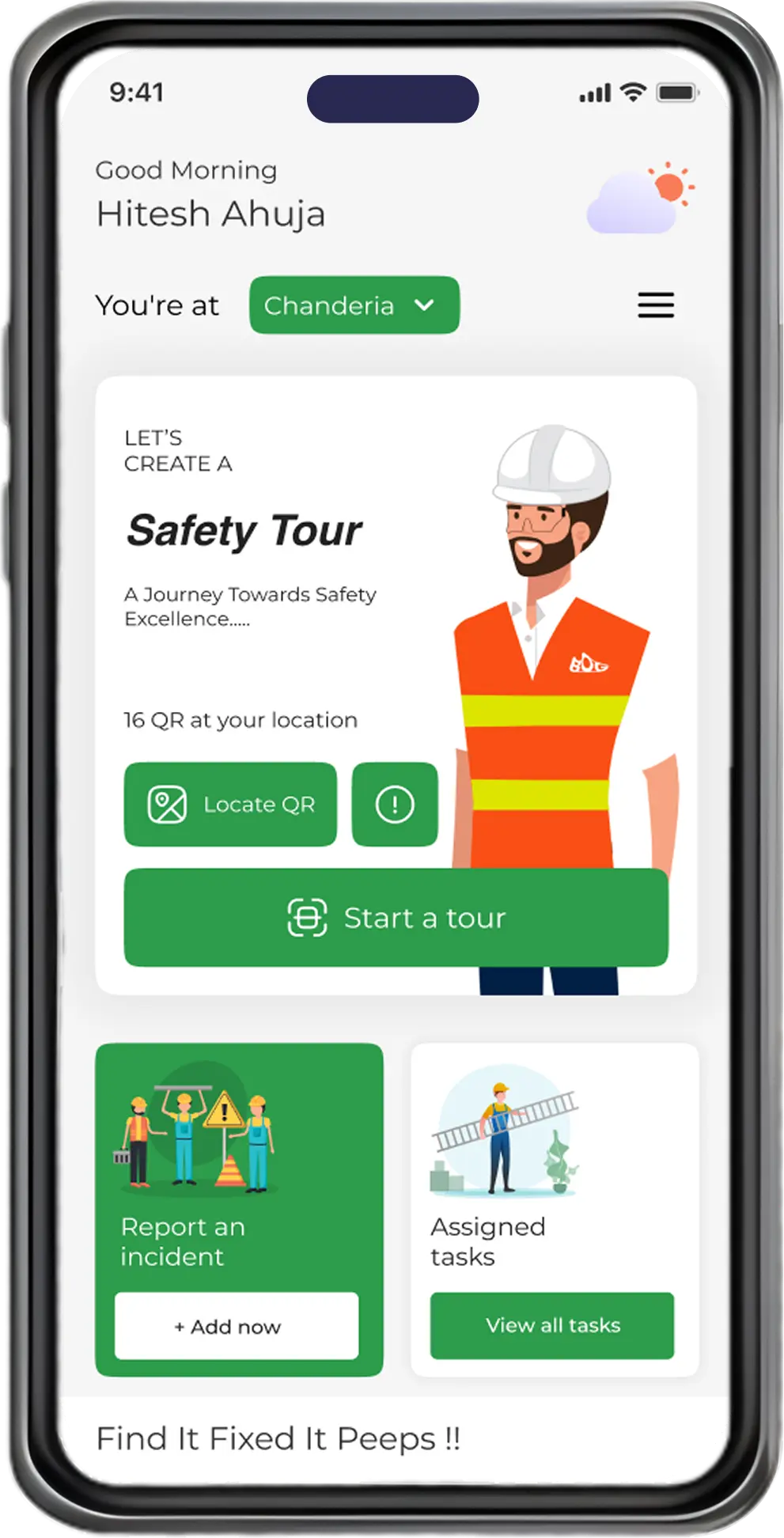
$10B
EHS software market size by 2030
Mordor Intelligence, 2025
5,283
Fatal work injuries in the US in 2023
BLS.gov, 2024
78%
Enterprises driven by regulatory pressure
Verdantix EHS Benchmark, 2024
7.34%
Market CAGR growth rate through 2030
Mordor Intelligence, 2025
Why Digital EHS Transformation Is No Longer Optional in 2026
The shift to digital safety management is no longer an IT project. It is an operational and legal necessity, and the gap between organizations that have made the transition and those still running on clipboards is widening every quarter.
OSHA reported a 22% rise in workplace safety inspections in 2024, and the U.S. Department of Labor recorded a 15% annual increase in funding for workplace safety initiatives. Both are signals of a regulatory environment that is becoming more active, not less (Source: OSHA.gov, 2025) . At the same time, around 78% of enterprises now identify regulatory pressure as their primary driver for EHS software adoption
(Source: Verdantix EHS Benchmark, 2024)
The business case sits on four pillars:

Real-time Accountability
Records exactly who performed an inspection, at which location, and at what time, with GPS verification and photo evidence. No ambiguity, no lost paperwork, no disputed records when an OSHA inspector arrives.

Data Integrity
Mandatory fields, GPS scan requirements, and time-stamping make back-filling paper logs impossible. Digital platforms are only as reliable as the last person who touched them — and that's now verifiable.

Predictive Insight
More than 61% of organizations now prioritize predictive analytics to reduce risk exposure before an incident occurs — a fundamental evolution from traditional reactive EHS reporting.

Knowledge Retention
Digital systems capture inspection histories, hazard observations, and safe work procedures in structured, searchable formats, preserving institutional safety knowledge and onboarding new workers faster.
The 5 Core Pillars of a Modern Digital EHS System
Not all EHS software delivers equal value. The difference between a platform that gets adopted and one that gets abandoned comes down to whether it solves the problems field workers and safety managers face everyday. Here is what a complete digital EHS platform looks like in practice.
QR-Based Safety Inspections and Zone Monitoring
The most persistent challenge in workplace safety is ensuring that inspections actually happen, at the right location, at the right time, completed by the right person. QR-based zone monitoring solves this by creating a physical-digital link between your facility and your safety data.
How it works: Facilities are divided into Safety Zones such as a chemical storage area, a loading dock, a production line, or a confined space entry point. Each zone receives a unique QR code physically installed at that location. When a worker arrives to inspect, they scan the code on their mobile device. The system opens a checklist specific to that exact zone, at that moment, with the photo evidence requirements relevant to that location.
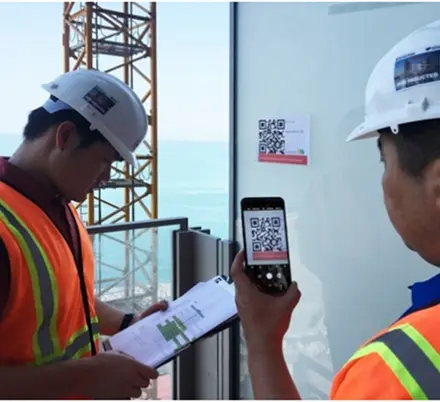
This eliminates proximity fraud, which is the practice of completing inspection forms from the break room rather than on the floor. A QR scan proves physical presence. Combined with GPS verification and time-stamping, it creates an inspection record that is legally defensible.
The operational value multiplies at the management level. BootsOnGround uses a Traffic Light Protocol that gives safety managers instant visual status across every zone in your facility:
- ● Green = Recently inspected. Compliant. No action required.
- ● Amber = Inspection due soon. Automated reminders triggered.
- ● Red = Overdue or flagged hazard. Immediate escalation required.
When you can see the safety status of 20 zones on one screen without opening a single spreadsheet, you have achieved the real-time visibility that paper systems can never provide.
Rise in digital safety inspections due to adoption of mobile EHS applications, increasing the frequency of hazard observation and corrective action documentation across all major industries.
AI-Powered Risk Intelligence
Artificial intelligence has moved beyond experimentation in workplace safety. In 2026, AI-driven hazard detection and predictive analytics are becoming a standard expectation in high-performing EHS programs, particularly across manufacturing, construction, oil and gas, and logistics.
AI-enabled safety analytics are a key differentiator in the current market, with documented enterprise deployments showing incident reductions of up to 80% in early implementations (Source: McKinsey and Company, Workplace Safety Report, 2024).
BootsOnGround's AI layer operates across three data sources that most facilities already collect:
- Near-miss report analysis - Most organizations dramatically underreport near-misses because the reporting process is slow or feels punitive. When reporting becomes fast, meaning just a few taps on a mobile device, volume increases and the data becomes actionable. AI then analyzes patterns across hundreds of reports to identify whether a specific machine, shift, location, or task type is generating disproportionate risk.
- Hazard description scoring - When workers submit hazard observations with photos, AI assesses and ranks the severity of those hazards automatically, prioritizing the most dangerous conditions for immediate management review rather than letting them sit in a queue behind lower-risk items.
- Shift and schedule pattern recognition - Incident data consistently shows that certain shifts, days of the week, and production cycle periods carry elevated risk. AI trend prediction surfaces these patterns so safety managers can increase supervision or adjust procedures before an incident occurs, not after.
BootsOnGround's platform also applies sentiment analysis to worker feedback submitted through the Community Wall. Understanding whether a site's safety mood is trending positively or negatively is an early warning signal that quantitative data alone consistently misses.
Mobile-First Incident Reporting
The speed at which an incident or near-miss is reported is directly tied to how easy the reporting tool is to use. If reporting requires a desktop login, multi-step navigation, and a written paragraph, near-miss rates will be low. If a worker can submit a photo, location, and brief description in under 60 seconds from any device, reporting rates increase dramatically and so does your risk intelligence.
Effective EHS platforms are built mobile-first, meaning the field experience is the primary design priority. This includes offline functionality, which is critical for facilities with poor Wi-Fi coverage or remote field operations. Reports captured offline sync automatically when connectivity is restored, ensuring no safety observation is ever lost.
For incident investigations, mobile tools enable immediate photo documentation at the scene, witness statements collected while memory is fresh, and automatic escalation workflows that notify the right personnel without anyone needing to remember who to call or what form to fill out.
Around 72% of new EHS platform installations now support mobile reporting functions, reflecting how central field usability has become to effective safety management (Source: Verdantix EHS Benchmark, 2024).
Safety Culture and Employee Engagement
Software performs only as well as the people who use it. The biggest limitation of traditional EHS systems is that they were built for management, not for the workers who face the actual risk every day. When workers feel that safety reporting is a one-way street that generates paperwork without producing visible results, participation drops and leading indicator data dries up.
Modern EHS platforms address this through visible feedback loops. Workers who report a hazard should be able to see it acknowledged, assigned, and resolved. Workers who demonstrate proactive safety behavior should receive recognition that is visible to their peers and supervisors.
BootsOnGround's Community Wall is designed around this principle. It functions as a workplace-safe social feed where safety becomes a visible, shared activity rather than a corporate compliance exercise. Workers post "Good Catches," which are proactive acts that prevented an incident, and share photos of resolved hazards that others can learn from. Peer-to-peer recognition for safe behavior consistently outperforms top-down safety messaging because it comes from trusted colleagues rather than a management notice on a wall.

This engagement layer matters because safety culture cannot be mandated. It must be built. Organizations where frontline workers actively participate in safety observation programs see measurably lower incident rates than those where reporting is management-driven and compliance-oriented.
Compliance Management and Audit Readiness
One of the most immediate operational benefits of digital EHS software is what happens at audit time. Organizations still running paper-based systems typically spend days before a regulatory inspection assembling documentation, chasing down signed forms, and hoping records from six months ago are still intact and legible.
A digital EHS platform eliminates this entirely. Every inspection, incident report, corrective action, training completion, and near-miss submission is stored in a time-stamped, searchable digital record. When an OSHA inspector or ISO 45001 auditor arrives, you pull any record instantly and filter by date, location, worker, or hazard type.
Industry-Specific EHS Requirements
Workplace safety is not one-size-fits-all. The risk profile of a chemical plant is fundamentally different from a construction site, a pharmaceutical lab, or a logistics hub. Effective digital EHS software must be configurable to address the specific compliance frameworks each industry operates within.

Construction
Multi-site contractor tracking, subcontractor induction management

Manufacturing
Lockout/Tagout (LOTO) workflows, QR zone inspections

Oil and Gas
AI-driven permit-to-work systems, lone worker monitoring

Mining
Equipment pre-start checks, confined space entry management

Logistics and Warehousing
Driver safety checklists, loading dock inspections, fatigue monitoring

Healthcare
Exposure incident reporting, biological hazard management
BootsOnGround's platform serves these industries without requiring separate systems for each. Zone configurations, checklist templates, and escalation workflows are fully configurable by site type, enabling organizations to standardize safety management across a diverse facility portfolio while maintaining the specificity each operation requires.
The ROI of digital EHS software
The business case for digital EHS transformation extends well beyond avoiding fines, though that alone is substantial. OSHA's maximum penalty for serious violations stands at $16,550 per violation as of 2025, with willful or repeated violations reaching $165,514 per instance (Source: OSHA.gov, 2025). A single serious workplace incident can trigger legal costs, workers' compensation claims, lost productivity, and reputational damage that dwarfs any software investment.
Organizations reducing reporting labor time through integrated EHS platforms report savings of over 48% on compliance documentation alone, which is time that safety managers redirect toward active risk prevention rather than administrative overhead (Source: Verdantix EHS Benchmark, 2024).
BootsOnGround customers have reported the following improvements after implementation:
40%
Reduction in workplace incidents within the first 12 months. Driven by higher inspection completion rates, faster hazard resolution, and AI-powered risk identification that surfaces problems before they become injuries.
Source: BootsOnGround customer data50%
Faster incident reporting and resolution cycles. Mobile-first reporting eliminates the delays that paper systems introduce between when an incident occurs and when it is documented, investigated, and closed out.
Source: BootsOnGround customer dataDays → Hours
Audit preparation time reduced from days to hours. All required documentation is already organized, time-stamped, and accessible by location, date, or hazard type.
How to Evaluate Digital EHS Software: Key Questions to Ask
If you are comparing EHS platforms, the following questions separate capable systems from ones that look good in a demo but get abandoned on the floor within six months.
Does it work where your workers actually are?
Mobile functionality, offline capability, and ease of use in a hard-hat environment are non-negotiable. A system requiring a desktop to function is not a field safety tool.
Can it be configured for your specific hazards?
Generic checklists are a starting point, not a finished product. Your platform must reflect the actual risk profile of your operations and compliance requirements.
Does it produce the records your framework requires?
OSHA 300/300A recordkeeping, ISO 45001 documentation, and industry-specific permit formats each have distinct requirements. Confirm your platform generates them automatically.
How does it handle corrective actions?
A near-miss report that does not trigger a workflow is just data. The platform must assign accountability, track completion deadlines, and escalate when those deadlines are missed.
What is the vendor's own compliance posture?
A safety software vendor should itself operate to verified quality, security, and service standards. Ask whether they hold ISO 27001, ISO 9001, or equivalent third-party certifications. BootsOnGround holds all three.
What does adoption look like post-implementation?
Ask for usage data, not just feature lists. High initial setup and low ongoing usage is the most common failure mode for EHS software. Six-month retention metrics matter.
Frequently Asked Questions
Ready to move beyond paper-
based safety?
Whether you are managing a single facility or coordinating safety across multiple sites and contractor teams, BootsOnGround provides the real-time visibility, automated compliance tracking, and worker engagement tools that modern EHS management demands.