bootsonground
High-Risk Digitalization: Tailoring EHS Workflows for Manufacturing Safety (2026)
In a manufacturing environment, a paper-based safety system is not just inefficient. It is a production risk. Digital LOTO workflows, AI hazard escalation, and real-time multi-site visibility change that.
 ISO 27001
ISO 9001
ISO 20000
ISO 27001
ISO 9001
ISO 20000

Digital EHS for manufacturing means embedding safety directly into production workflows rather than treating it as a separate compliance exercise. In 2026, manufacturers are using QR-based Lockout/Tagout workflows, AI-powered machine guarding alerts, dynamic checklist updates for line changes, and global multi-site dashboards to achieve Zero-Harm targets. BootsOnGround is built specifically for the high-risk, high-speed environment where a single safety failure can shut down an entire production line.
Why Generic Safety Checklists Fail
on the Factory Floor
Manufacturing is not a generic safety environment. Between heavy machinery, hazardous energy sources, high-speed production lines, and constant operational change, the margin for error is measured in seconds and millimeters.
Despite a 68% rise in corporate safety investments and near-universal digital transformation, LOTO violations increased 29% from 2022 to 2023, revealing that technology alone cannot replace worker trust or procedural rigor. The organizations reducing violations are not the ones spending more on safety. They are the ones embedding safety directly into the workflows workers already follow, rather than adding it as a separate step.
OSHA estimates that following proper LOTO procedures could prevent approximately 120 fatalities and 50,000 injuries every year, and that approximately 10% of all serious manufacturing accidents are directly linked to inadequate energy control.
This is the gap that High-Risk Digitalization closes. Here is how BootsOnGround addresses the four highest-risk areas in manufacturing safety.

1. Digital Lockout/Tagout Workflows
Lockout/Tagout is the single most persistently violated safety standard in manufacturing. LOTO violations ranked fifth in OSHA’s 2025 Top 10 citations list, but behind the numbers were preventable fatalities across facilities including Taylor Farms and Cintas.
OSHA recorded 2,532 LOTO citations from October 2022 to September 2023, resulting in $20,728,257 in penalties across 1,368 inspections. Food manufacturing faced the most citations with 384 violations and $7,495,528 in penalties, followed by fabricated metal products with 377 citations and $1,380,262 in penalties.
The root cause in most cases is not willful negligence. It is a paper-based permit system that workers can bypass under production pressure, and that management cannot verify in real time.
BootsOnGround’s digital LOTO workflow eliminates both problems. A maintenance worker arriving at an isolation point must scan the QR code assigned to that specific energy source to access the digital work permit. The system requires a photo of the physical lock and key in place before the work order can be marked safe to begin. No scan, no photo, no permit. The job does not start.
Every energy isolation event is automatically time-stamped, GPS-verified, and linked to the worker who performed it. Management can see the live LOTO status of every isolation point in the facility from the dashboard. And when the job is complete, re-energization requires the same verified digital sign-off, ensuring no machine is ever restarted while a worker is still in the line of fire.
Willful or repeated LOTO violations can result in OSHA penalties of up to $129,336 per violation. A single digital LOTO workflow that prevents one serious violation pays for itself many times over.
2. Management of Change on the Factory Floor
Manufacturing plants are dynamic. New machines are installed. Lines are reconfigured. Processes change in response to new products or production demands. In a paper-based safety system, updated procedures take days or weeks to reach the floor. Workers operate on outdated instructions in the gap.
BootsOnGround's dynamic checklist system closes this gap immediately. When a production line is modified, the platform administrator updates the QR-linked checklist for that zone in real time. Every worker who scans that zone's QR code from that moment forward receives the updated checklist automatically. There is no reprinting, no redistribution, and no version control problem.
For new machinery introductions, the QR code installed at that machine can be configured to require workers to complete a 30-second safety briefing acknowledgment before accessing the daily inspection checklist. The worker confirms they have reviewed the new operating hazards before they begin. The confirmation is logged automatically.
This means that the moment a line change is authorized, the safety documentation reflects it. There is no window where workers are operating on procedures that no longer match the equipment they are working with.
3. Machine Guarding and the 24-Hour Hazard Loop
Machine guarding continues to be an OSHA enforcement priority in 2025, with inspectors specifically targeting machines and equipment that lack proper lockout devices or documentation as a serious hazard category.
In a manual safety system, a loose machine guard might go unreported until the next monthly audit. In a facility processing hundreds of production cycles per day, that is an unacceptable exposure window.
BootsOnGround closes this window through the Community Wall. Workers who notice a loose guard, a failing sensor, or a missing protective cover post a Good Catch directly from the floor using their mobile device. The post is visible to their team, their supervisor, and the maintenance department instantly.
The AI layer adds a critical escalation function. When the system recognizes machine guarding keywords and photo patterns in a submission, it automatically escalates the ticket to Priority 1 for the maintenance team, bypassing the standard review queue. A machine guarding hazard does not wait in line behind a broken light fitting. It goes to the top.
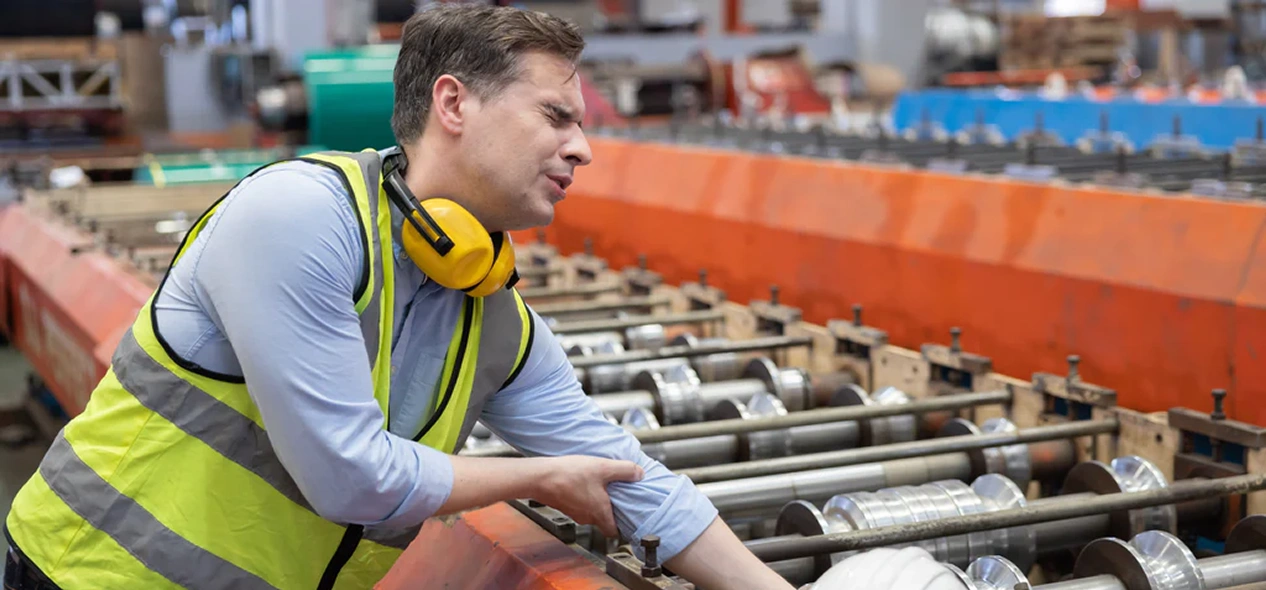
The result is a 24-hour hazard loop where a worker identifies a guarding issue at 6:00 AM, the AI escalates it to maintenance by 6:01 AM, and a repair photo is uploaded to the corrective action record before the next shift begins. No monthly audit required.
4. Standardizing Safety Across Multiple Manufacturing Sites
For manufacturers operating multiple plants, the most persistent safety challenge is consistency. How do you ensure that the safety standards in your Houston facility match your Mumbai plant, your Monterrey line, and your new facility in Lodz?
In a paper-based or fragmented digital system, you cannot. Each site develops its own inspection habits, its own reporting culture, and its own interpretation of the standard. The result is safety performance that varies dramatically by location and is invisible to leadership until an incident makes it visible.
BootsOnGround’s global dashboard gives leadership a single view of the Traffic Light status of every plant, every zone, and every shift across all facilities simultaneously. Green, amber, and red status is visible in real time regardless of time zone or geography.
Topical benchmarking adds a second layer of value. Safety managers can compare near-miss rates, inspection completion rates, and corrective action resolution times across sites. When one plant consistently outperforms others on a specific metric, their inspection templates, checklist structures, and Good Catch practices can be exported directly to underperforming locations as the new baseline.
This is how a best practice identified on a factory floor in Houston becomes standard operating procedure in Mumbai within 48 hours, without a single printed document changing hands.
The Manufacturing ROI
Beyond the direct safety outcomes, digital EHS transformation in manufacturing delivers measurable operational returns.
BootsOnGround customers in manufacturing report a 40% reduction in Lost Time Injuries within their first year, and 50% faster shift handovers because the safety status of every zone is verified and visible to the incoming team before they step onto the floor. (Source: BootsOnGround customer data)
The production uptime implication is significant. Every incident triggers a safety stand-down, an investigation, regulatory notification requirements, and often an OSHA inspection. The disconnect between safety investment and safety outcomes in manufacturing is not a technology problem. It is a culture and verification problem. Digital LOTO workflows, mandatory photo capture, AI escalation, and peer recognition through the Community Wall address both simultaneously.
BootsOnGround is certified to ISO 27001, ISO 9001, and ISO 20000, meaning the platform embedded in your production safety workflows operates to independently audited standards of data security, quality management, and service delivery. For manufacturers supplying Tier-1 enterprise clients or operating under ISO 45001 certification requirements, that vendor compliance posture is not a nice-to-have. It is a procurement requirement.
Frequently Asked Questions
Start Your Manufacturing Safety Transformation
BootsOnGround is built for the high-risk, high-speed manufacturing environment where a paper-based safety system is not just inefficient. It is a liability. The platform combines digital LOTO workflows, AI machine guarding escalation, dynamic Management of Change checklists, and global multi-site visibility into a single system certified to ISO 27001, ISO 9001, and ISO 20000 standards.
Read Full article :- The Zero-Gap Audit: How to Survive a 2026 Safety Inspection
Read Full article :- Return to the full Digital EHS Software and Workplace Safety Management Guide